
Emergency Chimney Sweep Near Me: What Hillsboro Homeowners Should Do First
If you think your chimney is on fire, the order of your next four moves matters more than how quickly a sweep can reach you. Close the damper, get everyone outside, call 911, then call a chimney professional. Most homeowners get step one backwards, reopening the damper to “let the smoke out,” which feeds air to a fire that’s already burning inside the flue. That single instinct can turn a contained chimney fire into a structure fire. If you’d rather not guess your way through it, call (855) 473-8720.
How Do You Tell a Chimney Fire From Normal Fireplace Noise?
A chimney fire sounds different from a normal fire. Normal combustion pops and crackles in a fairly steady rhythm. A chimney fire roars, and it sounds like a freight train or a low-flying jet passing overhead. That roaring is the sound of creosote igniting in the flue, and it’s the single most reliable indicator you’ll get.
Watch for these other signs, especially together with the roar:
- Sparks or flames from the cap. Look at the top of the chimney from outside. Flames or a shower of sparks at the cap means fire is escaping the flue.
- Radiant heat from the firebox surround. The masonry around the firebox, or the metal face of a prefab insert, feels intensely hot to the touch. Hotter than a normal burn.
- Dense smoke in the room. Smoke backing into the living space, or a strong burning smell that isn’t woodsmoke.
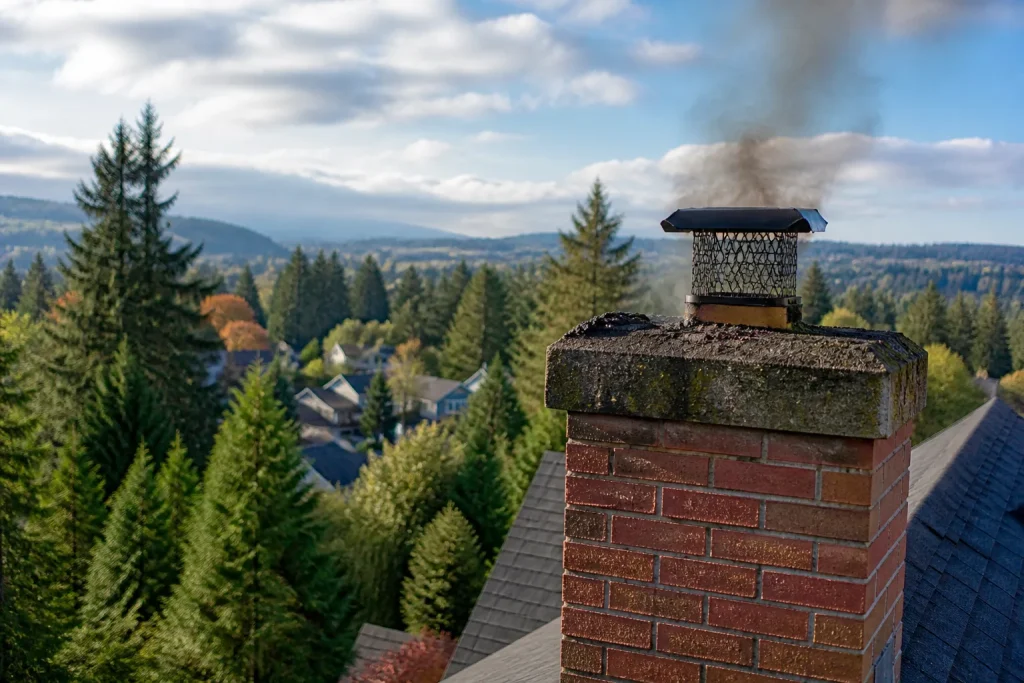
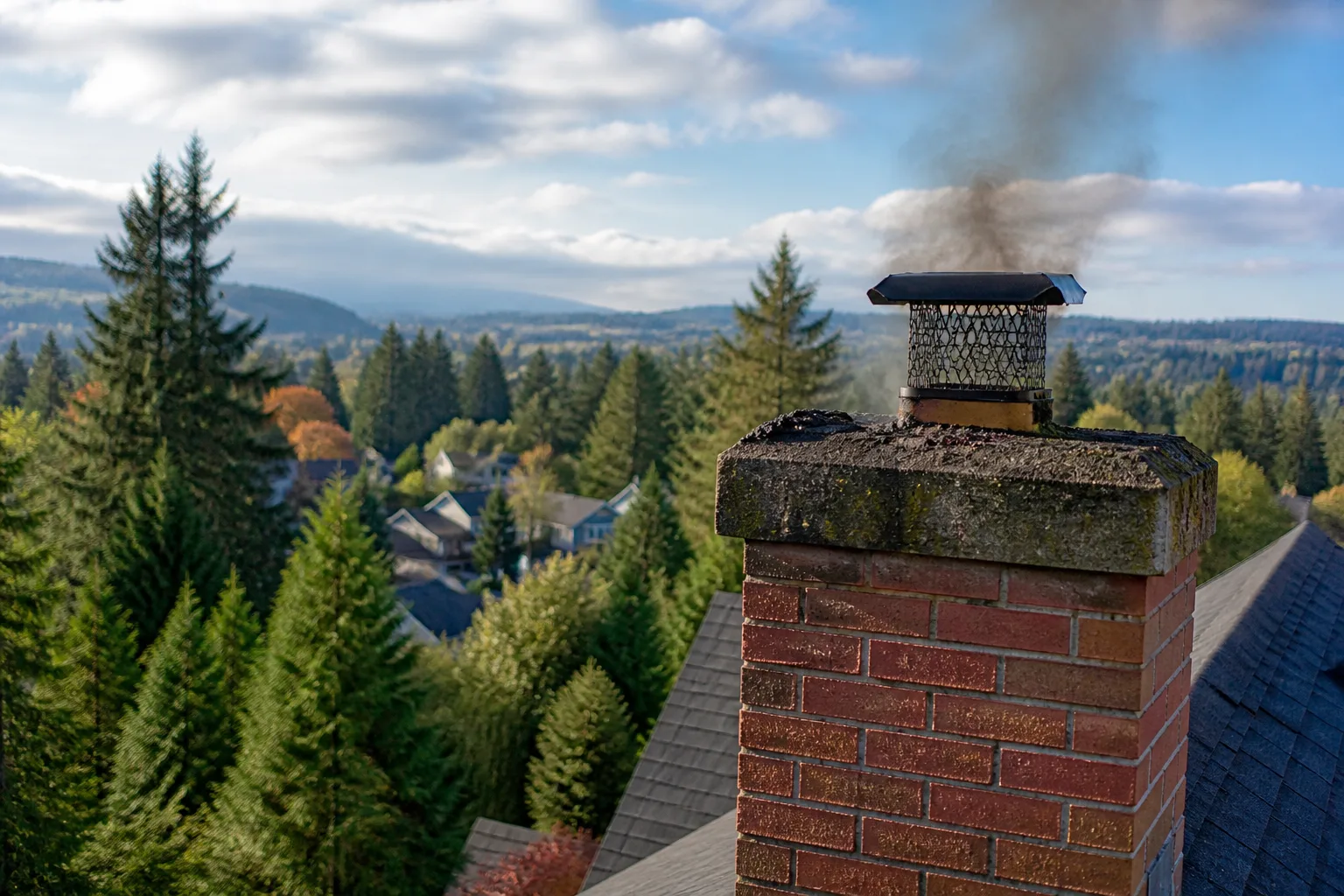
- A visible glow or dark discoloration at the cap. Creosote that has burned leaves a warped cap or scorched crown.
One important distinction: a chimney fire can also burn quietly and mostly unseen, creeping through a flue and starving itself of oxygen. The roaring kind is the emergency. The silent kind is why a full inspection after any suspected fire isn’t optional. Our technicians have up to experience, and in that time the pattern hasn’t changed: the loud fires get the attention, the quiet ones do the structural damage.
What Should You Do First in a Hillsboro Chimney Fire?
Here’s the sequence. Follow it in this order.
- Close the damper. A damper is a plate above the firebox that controls airflow. If yours is open, close it. This cuts the oxygen supply to a fire burning in the flue, which is exactly what you want. Do not reopen it to “let the smoke out.” That instinct is the most common mistake we hear about, and it does the opposite of what the homeowner intends.
- Get everyone outside. Every person, every pet. Don’t stop to gather belongings. Stand well away from the house.
- Call 911. Even if the fire appears to have gone out. Chimney fires can travel into framing and attic space where you can’t see them. A fire crew can check for extension into the structure.
- Call a chimney professional. Once the fire department has cleared the scene and said it’s safe to return inside, the chimney still needs a full inspection before anyone lights another fire.
Why call a sweep at all if 911 handled it? Because the fire department puts out the fire; it doesn’t assess the flue. A creosote fire leaves behind a flue that may be cracked, warped, or failing at the joints. That’s a separate inspection from anything a firefighter is trained or equipped to do. If you’ve had a fire, call (855) 473-8720 to book an inspection before you use the fireplace again. We answer 24/7, and a call outside dispatch hours is booked into the next opening.
Can You Just Sweep the Chimney After a Fire?
No. A standard chimney sweep after a chimney fire is not enough, and treating it that way is a real safety risk. A sweep removes soot and creosote off the walls of the flue, but a fire does damage a sweep can’t see. It can crack clay tile liners, open mortar joints, warp a metal liner, or leave glazed creosote behind that will re-ignite. Each of those problems makes the flue unsafe until it’s assessed and repaired.
What’s actually required after a chimney fire is a full chimney inspection, which means a camera inspection of the flue interior plus a look at the structure above and around it. The inspection tells you whether the flue liner is intact and whether any repair is needed. In our experience, the findings after a fire tend to fall into one of three categories:
- The flue held. The liner is intact and a proper cleaning is all that’s needed before re-use.
- The liner is damaged but structurally sound overall. This is where HeatShield comes in: a resurfacing system that can restore damaged clay flue tiles without a full reline. HeatShield capability saves homeowners the cost of a full reline when the structure behind the tiles is sound.
- The liner failed. That’s where a DuraFlex flexible liner comes in, replacing the damaged liner with a new professional-grade one.
An inspection is not an upsell. It’s how we find out what your flue actually needs, and we’d rather tell you honestly when a repair can wait than sell you work you don’t need. The written report shows you what the camera saw. If a competitor recommends thousands of dollars in repairs and you can’t see the evidence, ask for the camera images. That’s a red flag, not a reasonable request.
What About a Cracked or Crumbling Chimney After a Storm?
A visible crack, spalling brick, or missing mortar after a windstorm or an earthquake is a structural emergency, not a cosmetic issue. In Hillsboro, the wet winters and freeze-thaw cycles in the hills west of town are hard on masonry. Water gets into hairline cracks, freezes, expands, and quietly pushes the masonry apart. A windstorm can finish the job. What’s on the outside is usually a symptom of what’s happening behind the flue wall.
Here’s what to look for from the ground, without climbing anything:
- Spalling. Brick faces flaking off or crumbling. Look for chips or dust in the yard below the chimney.
- Missing mortar joints. Gaps between bricks you can see without binoculars.
- A leaning or visibly tilted chimney. It should be plumb. Any lean is a call-the-professional-now problem.
- Cracked crown or wash. The concrete cap on top of the masonry, or the sloped cement wash, should be intact. Visible breaks mean water is getting in.
- A shifted or missing cap. A chimney cap keeps rain, birds, and sparks in check. Components from Copperfield and Gelco hold up where retail caps don’t.
Never climb onto a roof to check or fix a chimney. That’s the kind of work that puts people in the hospital. A licensed professional can inspect from the ground and the roof, safely. When a storm has visibly damaged a chimney in Hillsboro, scheduling a chimney repair inspection is the right first move, before anything else is lit.
What Does “Emergency Chimney Sweep” Actually Mean in Hillsboro?
“Emergency” means different things depending on what’s happening. The realistic picture in Hillsboro:
- An active fire or a house full of smoke: that’s 911. A sweep isn’t a fire department, and a sweep shouldn’t be the first call.
- A post-fire inspection before re-use: scheduled promptly, and treated as priority.
- A visible masonry crack or spalling after a storm: a structural issue that’s scheduled as soon as possible. Same-day service is available on a legitimate structural call when we can get there.
- A strong odor from the fireplace, smoke backing into the room, or a flue that hasn’t been serviced in years: a regular scheduled appointment. Not an emergency, and shouldn’t be priced like one.
What a legitimate emergency call covers is a safety assessment and an honest recommendation. What it shouldn’t come with is an inflated price for the same job done after hours, or pressure to approve a full reline you haven’t seen evidence for. Prices are set per job by a written estimate. There’s no emergency surcharge in our pricing, and you’ll get a written estimate before any work begins. Call (855) 473-8720. We answer 24/7, and dispatch runs 7am-7pm, Sunday through Friday. Closed Saturday.
What Happens When You Call?
If you’ve had a fire, we start with an inspection. We’ll book a time, come out, put a camera down the flue, and take photos of what we find. You’ll see the images and get a written report. If the flue is fine, a standard chimney sweep clears the soot and creosote and you’re set. If a repair is needed, you get an honest recommendation on what it is, whether it can wait, and what it costs. A full sweep, inspection, and repair cycle is all handled by the same specialist, start to finish. No handoffs.
If you’re not sure whether what you’re seeing is an emergency or just an overdue cleaning, that’s a fair question to ask. Call (855) 473-8720 and describe what you’re seeing. We’ll tell you plainly.
Related services in Hillsboro
If you’re not sure where to start, our main page on Chimney Sweep Hillsboro covers the full service, and chimney repair covers damage assessment and structural work.
The Bottom Line
During an active chimney fire, the first 20 minutes are about sequence, not response time. Close the damper, evacuate, call 911, then call a sweep. Don’t reopen the damper to “let the smoke out.” And never light the fireplace again after a suspected chimney fire until a full inspection confirms the flue is sound. A standard sweep after a fire is not enough. A camera inspection is what tells you whether the flue is intact, whether HeatShield resurfacing can save you the cost of a reline, or whether a DuraFlex liner replacement is the right call.
If you’re in Hillsboro and need help, Chimney Sweep Hillsboro offers free estimates. Call (855) 473-8720.
Frequently Asked Questions
Pricing is set per job by a written estimate, and the estimate is free. That said, a standard sweep, a full inspection, and post-fire assessment aren’t the same job, so don’t compare quotes as if they were. Ask what each quote includes, whether the inspection is camera-based, and whether you’ll get a written report. A legitimate quote is itemized and comes with a written estimate before any work begins. Call (855) 473-8720 for an exact quote.
Not always. It depends on what the inspection finds. If the clay tiles are cracked but the structure behind them is sound, HeatShield resurfacing can often restore the flue without a full reline, which saves considerable cost. If the liner has actually failed, a DuraFlex flexible liner is the right replacement. The inspection report, with camera images you can see, is what tells you which situation you’re in. Call (855) 473-8720 and we’ll walk you through it.
Most wood-burning fireplaces should be swept annually, and more often if you burn frequently. A gas fireplace still needs an annual inspection. A fireplace you haven’t used in over a year, or a home you recently bought with an unknown chimney history, is worth a look before the next burn season. If you’re not sure, an inspection tells you whether a sweep is even needed. Call (855) 473-8720 – estimates are free.
Creosote builds up on the flue walls with every fire. Glazed creosote is highly flammable, and once it ignites, you have a chimney fire. Carbon monoxide is the other concern: a blocked or damaged flue can send exhaust back into the house instead of up and out. Neither outcome is rare, and a sweep every year, plus an inspection to catch structural problems, is how you avoid both. Call (855) 473-8720 if you haven’t had your chimney checked.
Yes. That’s the whole point of the inspection. If a repair can safely wait until after burning season, we tell you. If it can’t, we show you the camera evidence and explain why. You don’t have to take our word for it – you’ll see what the camera saw. Call (855) 473-8720 to book an inspection.
Written by the team at Chimney Sweep Hillsboro.
Need Chimney Cleaning Help?
Call Chimney Sweep Hillsboro - licensed & insured, with free written estimates in Hillsboro.
(855) 473-8720